

2025 marked a turning point for the company. We evolved from an AI workplace search tool into a complete knowledge and automation platform, and reintroduced ourselves as xdge.
Throughout the year, we focused on delivering the following concrete outcomes for our customers:
- Enterprise automation & actions – turning research and insights into executable workflows that transform ideas into actions. Orchestration, actions, code-generation, safe-mode previews & chat-based flow builder.
- Speed that feels instant – search and assist fast enough to be used continuously throughout the day. A massively multi-threaded & optimized enterprise RAG stack.
- Platform depth & breadth – ensuring users see value through the versatility & robustness of capabilities: Automations & actions, Skills Library, Salesforce & Jira query languages, web search, & the Microsoft stack.
- Meeting intelligence without friction – capturing and operationalizing meeting knowledge without disrupting conversations. Meetings & Clips for synchronous and asynchronous note-taking.
- The rebrand from Ayraa to xdge AI - a new name & brand that goes beyond being just an AI assistant to being an end-to-end enterprise platform.
Below is a recap of what we shipped in 2025, organized around these themes. Together, these releases transformed xdge into a platform teams rely on every day to search, reason, and act.
Enterprise Automations & Actions 🤖
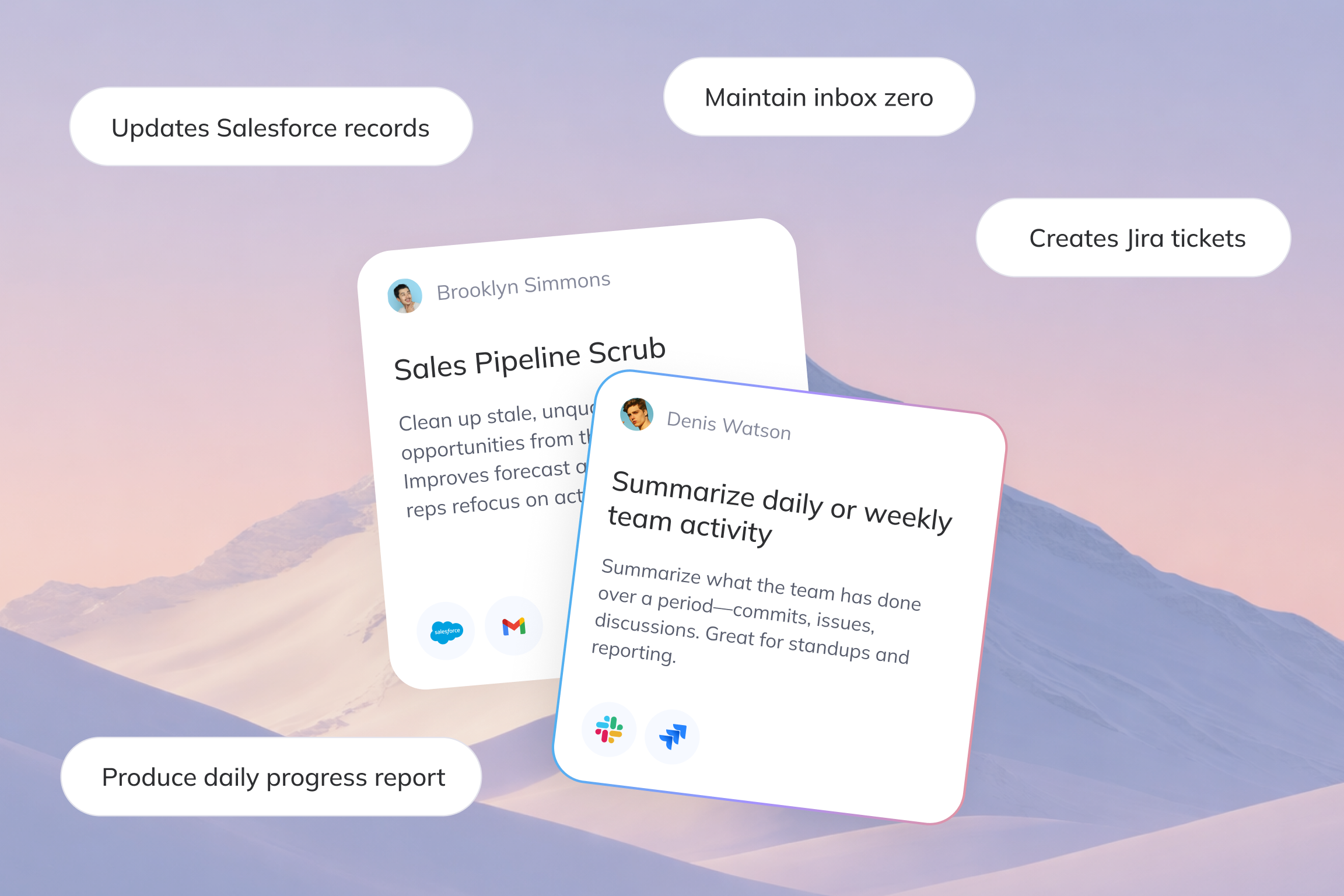
The most crucial product theme of 2025 was automation, not automation that suggests actions, but automation that does the work.
Workflows 2.0: Automatic Tool Creation (Flagship)
Our most significant product achievement of 2025 was the launch of Workflows 2.0.
This marked our transition from AI that answers questions to AI that builds and runs tools on your behalf.
Over the summer, our Workflows evolved dramatically. By September, Workflows 2.0 launched, allowing multi-step automations that can not only gather information but also perform updates and create records in other apps. We introduced a safe execution mode (“dry run”) so you can preview what a workflow will do before it makes any changes, giving you confidence and control. This paved the way for true “hands-off” automation of business processes.
Workflows 2.0 is now the foundation of the xdge platform and the lens through which future features are built.
Real Workflow Examples
Throughout 2025, we built and demoed powerful use cases that replace manual work:
- Slack → Jira Automation: Using our workflow engine, we set up an automated process that listens for bug discussion in Slack and creates Jira tickets autonomously. No more forgetting to file a ticket – the system recognizes when a message describes a bug or task and logs it for you in Jira, complete with details.
- Salesforce Data Sync: We deployed a workflow that monitors deal updates in Slack or email threads and updates Salesforce records accordingly. It even automatically moves opportunities through the pipeline stages. This kept CRM data up to date without having sales reps spend time on data entry.
- Daily Team Report Generation: We launched an automation in November that pulls together activity from Jira and Slack to produce a daily progress report. It compiles what got done each day, what’s stuck, and key achievements, then shares it to a team Slack channel each morning. Managers no longer need to chase updates or assemble reports manually – they wake up to a ready-made digest of yesterday’s work.
- Inbox Zero for Gmail: One of our new workflows (readied in December) uses AI to continuously triage your email. It analyzes incoming Gmail messages and auto-labels them into categories like Important, Needs Response, FYI/Notifications, or Spam. Frequent contacts and urgent content get flagged so you can focus, while routine notifications are tucked away. This helps busy professionals maintain inbox zero with minimal effort, as the AI skim-filters the noise and spotlights what matters.
“Replit for Work” – Custom Tools on the Fly
A highlight of our automation journey was unveiling dynamic tool creation in June, think of it as a “Replit for work”. This technology enables our AI to generate custom mini-apps or connectors on the fly within a workflow. If your process needs to interact with a system that isn’t pre-integrated, the AI can spin up a temporary tool or code to bridge the gap. This is cutting-edge agentic AI, and it means our platform can adapt to handle novel tasks without waiting for our engineers to build a custom integration. It’s a glimpse of how future-proof and flexible automation can be.
Speed That Feels Instant 🚀
In 2025, speed became a top-priority product. Our goal was simple: make xdge fast enough that it disappears into the background of daily work.
Sub-Second Search
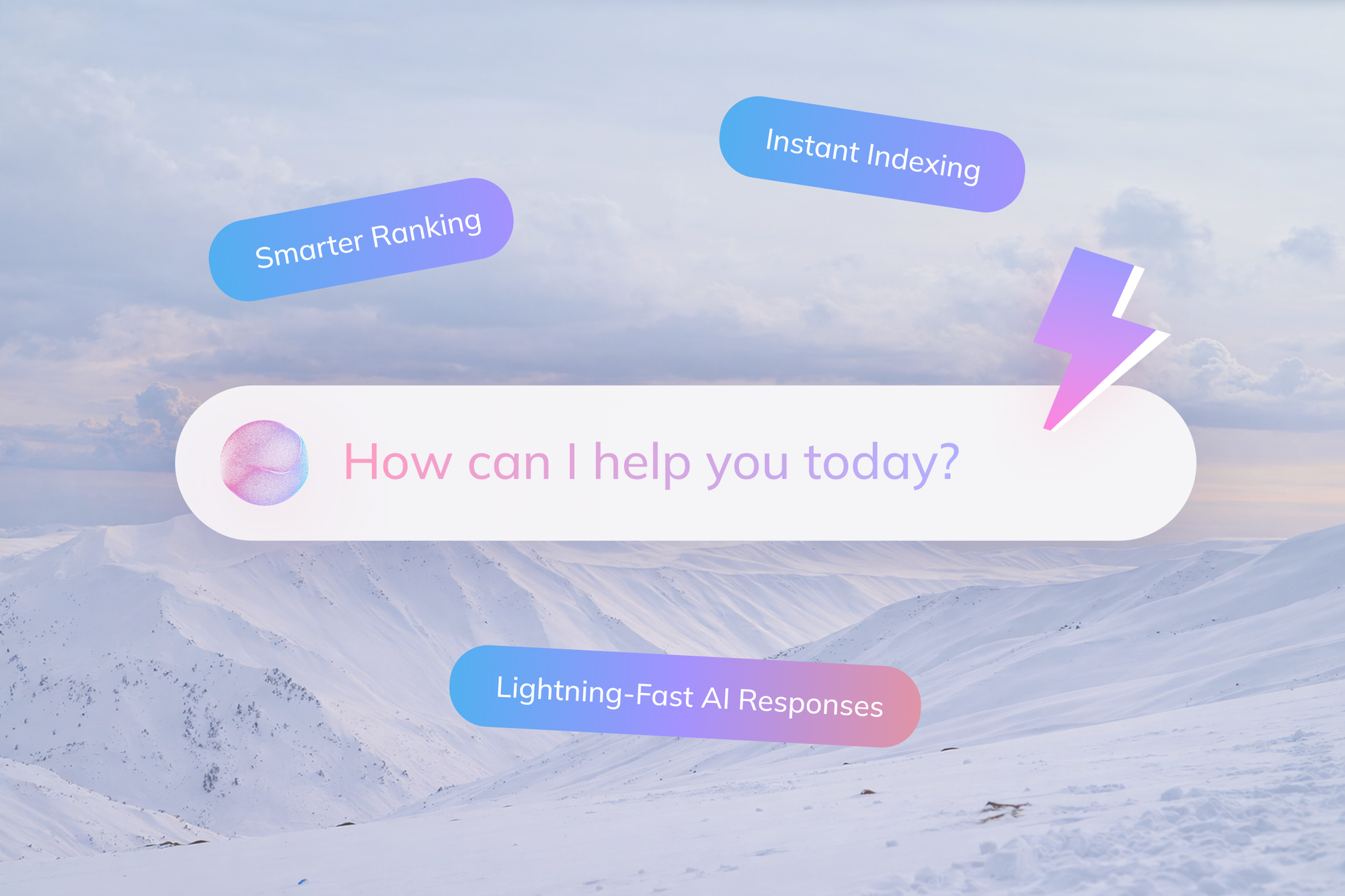
We began the year by overhauling our core search engine. In January, we launched an improved Recent Search mode that delivers near-instant answers for the last 90 days of data. By combining semantic retrieval with optimized keyword indexing, search now returns results in seconds across email, Slack, documents, and meetings.
We also introduced more intelligent ranking using Reciprocal Rank Fusion (RRF), ensuring the most relevant results consistently surface first. This reduced noise and made search behavior feel intuitive and predictable.
Faster App Performance
Beyond search, we aggressively optimized platform performance. By early Q1, page load times dropped by 43%, from ~3.5 seconds to under 2 seconds. Additional improvements later in the year, including smarter caching and progressive loading, made navigating Search, Chat, and Workflows feel fluid and responsive, on par with top consumer apps.
Faster AI Responses
Speed mattered just as much for AI assistance. By mid-year, we optimized our AI orchestration pipeline and model selection, dramatically reducing response times. Complex cross-tool questions like “What’s the status of Project X?” now return coherent answers in seconds, enabling a truly conversational workflow that keeps pace with how people think.
Instant Indexing
In September, we eliminated one of the most significant onboarding pain points: waiting for data to index. With pre-crawling, new integrations (Google Drive, Box, Confluence, etc.) now index the most recent 30 days of content within minutes. Teams can start searching immediately, rather than waiting hours or days.
Together, these enhancements made xdge incredibly responsive. Speed isn’t just a nicety; it drives usage. With sub-second searches and immediate answers, our platform became something teams rely on dozens of times a day to find information and get work done without interruption.
Platform Depth & Breadth 🏭
In 2025, xdge AI became more versatile and powerful
Skills Library & Templates
Perhaps our strongest initiative for rapid time-to-value was launching the xdge Skills Library. This is a public, searchable gallery (at skills.xdge.ai) of pre-built workflow templates, prompts, and “skills” curated by our team. We spent months developing and refining templates for everyday use cases in Sales, Engineering, Customer Success, and more. On November 17, we officially launched the library with an initial batch of certified workflows, including a Slack-to-Jira issue creator, the Gmail Inbox Zero triage bot, a Salesforce opportunity updater, and a daily team activity report generator. Instead of starting from scratch, new users can browse the Skills Library and deploy a ready-made workflow in minutes. It’s like having an app store for work automation, one that dramatically cuts down the time and expertise needed to get up and running. For example, a sales manager curious about xdge can grab a “Salesforce Pipeline Health Check” skill from the library and see it working with their data on day 1, without any complex setup. This library continues to grow, and it embodies our commitment to out-of-the-box value.
Salesforce & Jira: Live Business Querying with SOQL and JQL
Early in the year, we shipped Salesforce Integration v2, powered by native SOQL-based querying. Users can now ask natural-language questions about Salesforce data and get live answers, without building reports or dashboards.
Examples:
- “Which enterprise deals over $100k are at risk this quarter?”
- “What opportunities have been stuck in negotiation for more than 30 days?”
We extended the same capability to engineering teams with Jira JQL-powered querying, enabling questions like:
- “Which high-priority bugs have been open for more than two sprints?”
- “What tickets were created after last week’s incident?”
Behind the scenes, xdge translates intent into optimized SOQL and JQL, executes queries safely, and returns structured results instantly. Salesforce and Jira became conversational systems, not static databases.
Web Search, Built In
In 2025, xdge expanded beyond internal knowledge by introducing native web search, fully integrated into Assist, Deep Research, and Workflows.
Users can now combine internal company context with real-time external information, for example:
- Market research blending internal sales notes with live competitor updates
- Vendor evaluations enriched with current documentation and pricing
- Research workflows that continuously monitor the web for changes
Web search in xdge is context-aware, citable, and composable into workflows, making xdge a true research and execution layer, not just a workplace search tool.
Microsoft Ecosystem Integration
We also completed full integration with the Microsoft ecosystem, a critical milestone for enterprise adoption.
xdge now supports:
- Microsoft Outlook Email
- Microsoft Outlook Calendar
- Microsoft OneDrive
- Microsoft SharePoint
- Microsoft Teams meetings
- Microsoft Teams chat
Teams can search and summarize emails, generate follow-ups from meetings, trigger workflows from calendar events, and combine Microsoft data with Salesforce, Jira, Slack, and Drive, all in one place.
For Microsoft-first organizations, this unlocked xdge as a unified intelligence layer across their entire stack.
Meeting Intelligence Without Friction 📈
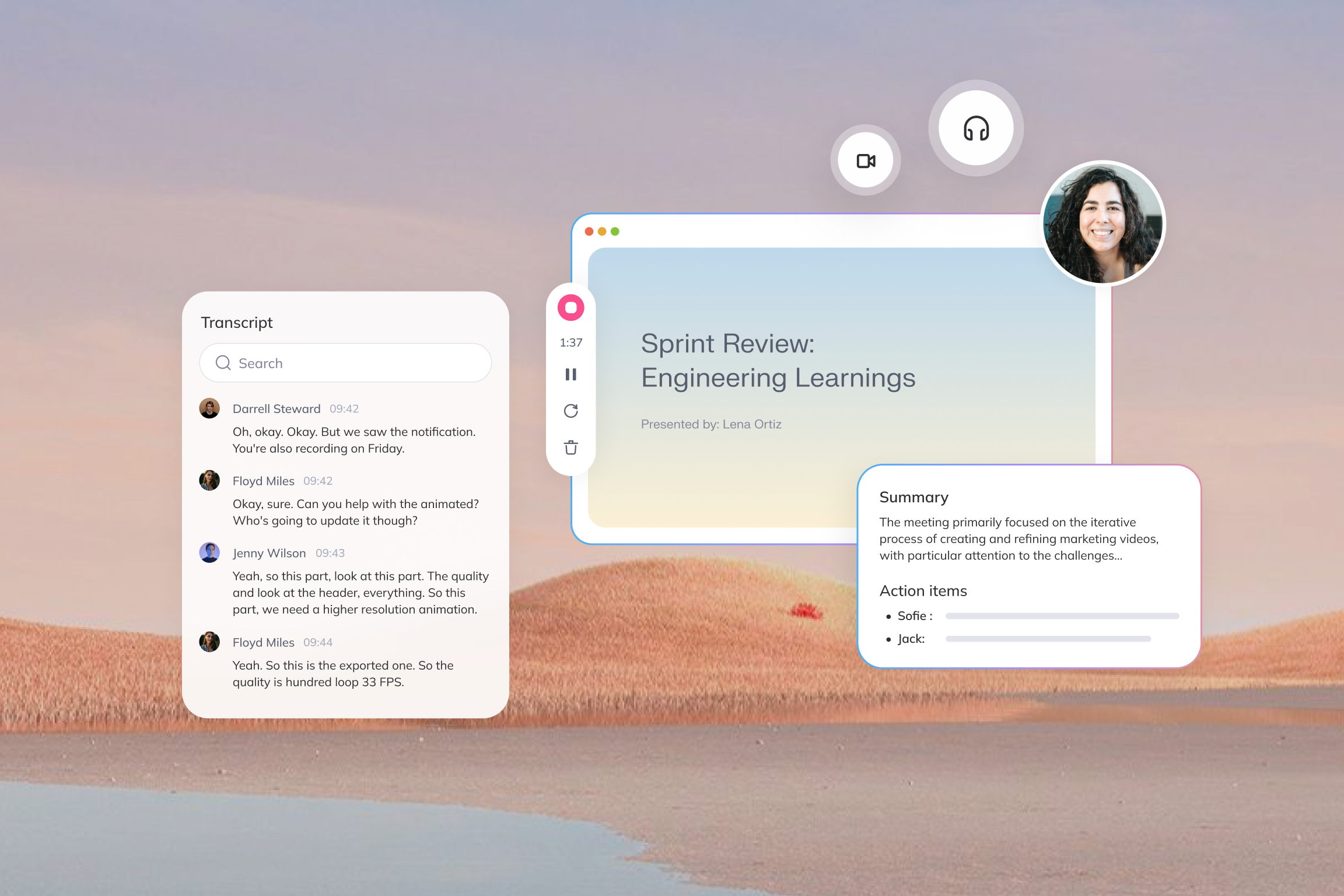
Meetings contain some of the most valuable information in any organization, but capturing and using that information is usually painful. This year, we made meeting intelligence a seamless part of xdge without friction or third-party bots, so you can focus on the conversation while the AI handles the rest.
First-Party Meeting Infrastructure
At the start of 2025, we made a big architectural change: we brought our meeting transcription bots in-house. Our Meetings v2 update replaced third-party services with xdge’s own proprietary bot. When you schedule a meeting (on Zoom, Google Meet, or Microsoft Teams), our bot joins to record, transcribe, and summarize, now with greater reliability and security since it’s all under our roof.
By November, we had fully migrated all meeting recordings to our own infrastructure, squashing a host of lingering issues (especially around MS Teams) and improving accuracy in speaker identification and note-taking. This gave us more control to innovate faster on meeting features without being held back by external dependencies.
Lower Costs, More Data
By owning the full meeting pipeline and optimizing our tech, we slashed the cost of transcribing meetings by 80% (from about $1 per hour of audio to just $0.20). These savings enabled us to consider offering transcriptions at disruptively low pricing. Our vision is to remove any barrier to recording and analyzing meetings – you shouldn’t have to think twice about hitting “Record” on an important call. We’d rather you capture everything (with consent) and let the AI surface the highlights, action items, and insights for you later. This strategy of potentially making text transcripts free (while charging for premium video/audio features) also drives virality: it encourages sharing meeting notes and AI summaries widely within and even outside your organization.
Botless Recording with Clips
We tackled the common concern: not everyone is comfortable with a bot in their meeting. In February, we pioneered a botless meeting recorder using a browser extension.
This approach captures audio clips (and even screen-shares) directly from your browser during a meeting, so there’s no visible bot participant.
We evolved this into a full feature called Clips.
By August, Clips graduated from QA into production as a lightweight way to record any conversation or demo, not just formal meetings. With one click, you can capture your screen and microphone, and our system will transcribe and analyze the recording. It’s like a stealth meeting recorder or a next-gen “Loom,” right inside xdge. Clips produces transcripts in as little as 20–30 seconds after you finish recording, and it provides AI-generated summaries and even a chat interface to ask questions about the recording.
This was a game-changer for users who want to save call notes, create walkthrough videos, or share knowledge asynchronously without scheduling a meeting.
Chat With Meetings & AI Coaching
Throughout the year, we improved the quality of meeting intelligence. Our transcription accuracy and speaker detection improved, and we enhanced the summaries to include key points, decisions made, and follow-up actions.
By July, we introduced chat with your meetings, the ability to ask our AI Assistant questions about a specific meeting transcript or recording. Instead of re-reading notes, you can query, “What did we say about Project Alpha’s deadline?” or “Who was tasked with the budget review?” and get an instant answer pulled from the meeting content. This turns your past meetings into a searchable knowledge base.
Later in the year, we launched AI Coaching, delivering role-specific feedback after meetings, for sales, engineering, leadership, HR, and Customer Success, grounded in real conversation data.
These AI Coaching prompts analyze your meeting transcripts and give you tailored feedback and tips. Unlike sales-only tools that coach reps on calls, xdge’s coaching covers multiple roles: sales teams get feedback based on proven frameworks like SPIN Selling and Challenger Sale, Customer Success managers receive tips on relationship building and retention, engineering leads get communication and delegation guidance, HR leaders see suggestions rooted in Nonviolent Communication and even Radical Candor, and executives get coaching aligned with leadership models like GROW. This all happens automatically after your meetings; it’s like having a specialized coach in every team meeting, offering pointers on what went well and what could be improved, customized to each discipline. And because it’s based on actual conversation data, the feedback is concrete and immediately applicable.
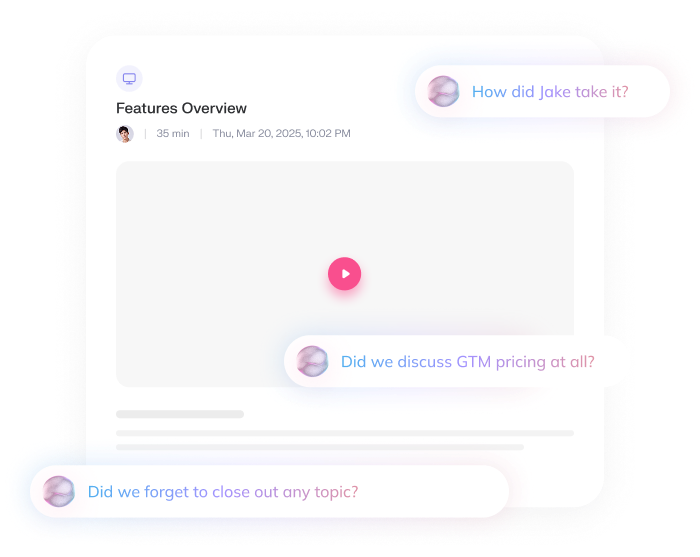
In short, xdge turned meetings into structured, usable knowledge. Instead of conversations disappearing into calendar history, xdge makes them part of your day-to-day workflows.
The Rebrand: from Ayraa to xdge
In June 2025, we introduced xdge, a new name that reflects a clearer, more ambitious direction for the platform.
xdge represents a shift toward a reasoning-enabled, agentic system built to sit at the edge of enterprise intelligence. It’s designed to connect knowledge to execution through search, meetings, and workflows, and to serve as a durable infrastructure that teams can rely on every day.
Alongside the rebrand, we launched a refreshed website focused on clarity. Core pages like Workflows, Search, and Meetings were redesigned with direct, action-oriented language, while the homepage and “Why xdge?” page clearly show how the platform’s core products work together. A late-November refresh sharpened the message further with modern visuals and positioning aligned to real customer pain points.
We also invested heavily in educational resources to support adoption. Throughout Q4, we released end-to-end product demo videos showcasing real workflows and use cases, published technical deep dives and white papers for champions and decision-makers, and added a continuously playing platform demo so visitors can see xdge in action immediately.
Through these efforts, we drastically shortened the time between signing up and seeing results. Whether it’s deploying a pre-built workflow from the Skills Library, experiencing instant search, or watching a demo tailored to a specific use case, teams can move past setup quickly and start benefiting from xdge right away. Our goal is for teams of any size, from a 5-person startup to a 5,000-person enterprise, to feel value on Day One and grow value in the days and weeks that follow.
Enterprise & Security Readiness 🔐
In 2025, we strengthened xdge’s enterprise security and compliance foundation to support broader adoption across regulated organizations.
We achieved SOC 2 Type II certification, validating that our security controls are consistently enforced over time, and completed CASA v2 compliance, ensuring our Google Workspace integrations meet strict data protection standards. We also published a formal Security Whitepaper outlining our security architecture, encryption practices, and data handling model.
These milestones ensure xdge can be deployed with confidence in enterprise environments.
Looking Ahead 🔮
In 2026, we’re shifting from “capability expansion” to outcome depth. We’ve built a powerful platform—now we’re going to take the most important use cases and go deep enough that teams get turnkey solutions they don’t need to build in-house.
Here are the outcomes we’ll be focused on next:
Turnkey, end-to-end workflows for high-value use cases
We’ll take our most-used workflows and harden them into complete solutions—fully integrated, fully automated, and ready to deploy.
- Inbox Zero, built inside-out: not just triage, but a complete system for prioritization, follow-ups, routing, and closure—so your inbox stays clean without constant manual effort.
- End-to-end sales automation: a tightly integrated motion that keeps your CRM and pipeline updated automatically. Opportunities get checked and progressed, tasks are created when deadlines approach, nudges are sent at the right time, Slack/email chatter gets captured into the opportunity record, and follow-up emails are drafted based on meeting next steps and live deal context. The goal: sales ops that runs itself, without every team assembling custom workflows.
- RFP response automation: we’ll automate the workflow of responding to RFPs—pulling the right internal context, drafting responses, and packaging outputs so teams can move faster without reinventing the process each time.
Expanding into small business and solopreneur workflows
We’re increasingly seeing demand beyond large enterprises—especially from small teams and operators who need automation even more because they don’t have staff bandwidth. We’ll build for use cases like staying on top of inbound customer messages (e.g., Facebook Messenger and SMS-style text inquiries), responding quickly, tracking follow-ups, and keeping customer communication organized across channels.
Connector scale: from dozens to thousands
Today, we support dozens of connectors. In 2026, we’re aiming to reach hundreds to thousands—potentially through partners—so xdge can plug into far more systems without waiting on bespoke integrations.
Tools: expanding the Skills Library beyond workflows and prompts
We’ll be launching Tools as a new capability that extends the Skills Library from workflows and prompts into certified, reusable action primitives—specific operations inside connectors that can be reliably called in automation.
For example, beyond searching and retrieving content from Google Docs or Microsoft Teams, tools will enable actions like:
- Creating a Google Calendar event with attendees
- Posting a message to a Microsoft Teams channel or thread
The key shift: instead of “vibe coding” connector logic on the fly via the “Replit for Work” approach, we’ll generate and ship these capabilities in advance in a certified, production-ready form. Over time, this becomes hundreds (and eventually thousands) of tools that dramatically reduce the time it takes to build and run automations.
That’s the focus for 2026: fewer DIY builds, more turnkey outcomes—powered by deeper workflows, broader connectors, and a certified tools layer that makes automation dramatically easier to deploy at scale.


